“Those poems will live forever”
An interview with the poet Kevin Bertolero, publisher of the gay poetry journal "& Change".
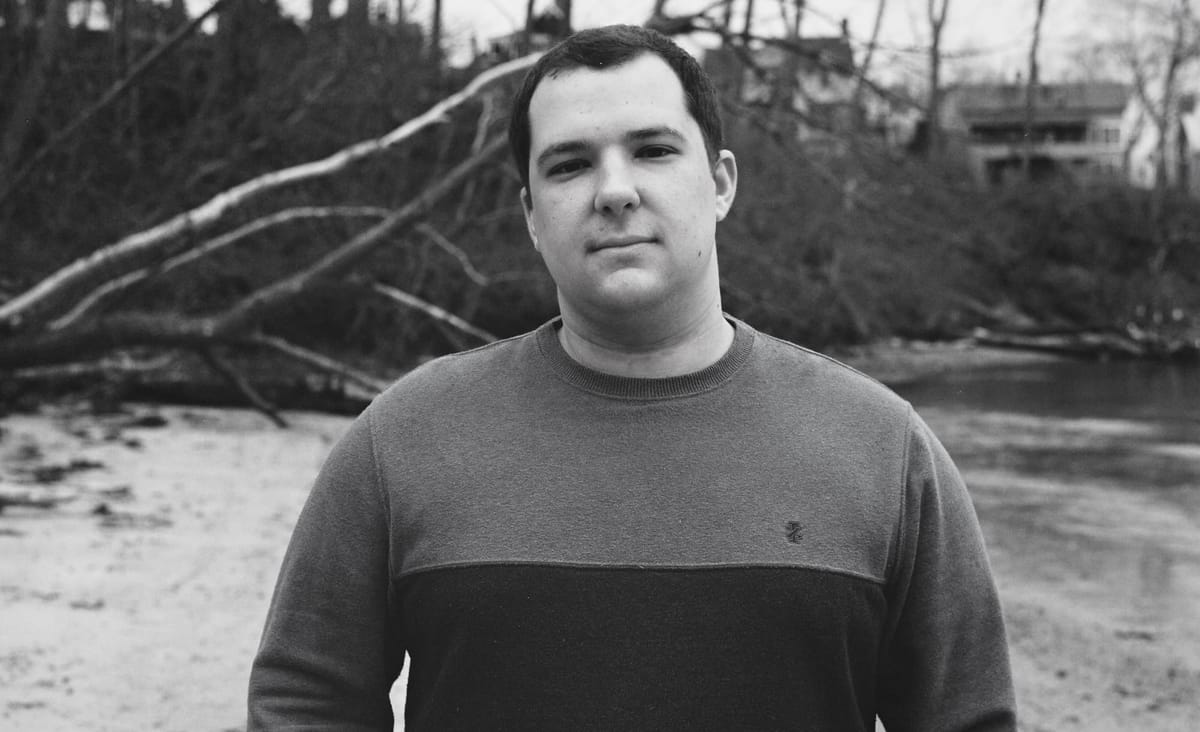
Thanks to & Change, his gorgeous poetry journal, Kevin Bertolero has introduced me to a swathe of fabulously talented contemporary gay poets I doubt I would otherwise have encountered.
It's no exaggeration to say that & Change is right up there among my favourite and most-anticipated periodicals. (At 24 finely edited pages, it's also a lot more appetising and digestible than many of its thicker literary peers.)
Kevin's poetry is every bit as stellar as his publishing practice; his most recent collection, In Passing, came out earlier this year. In this interview he chats about writing and publishing gay poetry, and reflects on the enduring power of print.
Xander Beattie: On & Change's website, it mentions that the journal was "created in the spirit of various poetry journals from the Gay Liberation era — and in honor of the work done by writers and editors like Charley Shively (Good Gay Poets Press & Fag Rag), Larry Mitchell (Calamus Books), Ron Schreiber (Hanging Loose), Winston Leyland (Gay Sunshine Press), Paul Mariah (Manroot), and Andrew Bifrost (Mouth of the Dragon)". Could you tell me more about these inspirations and influences? How have they shaped your publishing work?
Kevin Bertolero: As an undergrad, I was very fortunate to have been able to work with Maurice Kenny, a Native American poet who sadly passed away in 2016. I served as his editorial assistant and would visit him at his home in Saranac Lake, NY. One weekend I was going through his books and found that he had an early chapbook, Only as Far as Brooklyn (1979) published by Good Gay Poets Press—and this was a discovery for me. I started researching Good Gay Poets and Charley Shiveley who ran it, and that led me to a number of incredible gay poets I was unfamiliar with—David Eberly, Walta Borawski, and Aaron Shurin, just to name a few.
When I spoke with Maurice about this, he had stories to tell me about the gay poetry circles in New York and Boston in the late 70s and early 80s, and this led me to Winston Leyland and Gay Sunshine Press out in San Francisco, and from there a bunch of West Coast poets who have been sort of lost to time in the decades since.
I’ve been kind of picking away at this research for the last decade or so, and hopefully it will turn into a larger book or anthology of sorts, but these poets and editors have been very inspirational to me, especially as I read their letters and learn more about the communities (both local and national) that they built.

XB: You've published 10 issues of & Change since launching in September 2022. Impressive! What are your secrets/tools/habits to support a consistent publishing practice?
KB: You know, in some ways it’s actually been easier to put together each consecutive issue of & Change. We accept rolling submissions and there’s always so much great work to choose from every couple of months, and with the size of our readership increasing, this has meant more submissions. It’s hard to believe it’s already been a little more than three years since I started the journal, but publishing on a regular schedule has helped me develop what feel like cyclical and/or seasonal practices now. March, July, and November are for really digging into the submissions. April, August, and December, the issues come together and I can see how the pieces commune with and respond to one another. January, May, and September are for celebrating the new issues and sharing these wonderful poems with our readers. And then February, June, and October give me a chance to take a breath and to start thinking about the next issue.
XB: It's been exciting to see that, in addition to the regular journal, this year & Change expanded its output, publishing a full-length collection (In Passing) and a chapbook (DAYTIMEPOET). Can you tell me a bit about the decision to expand the & Change imprint a.) beyond the journal in general and b.) about the development of the these two stunning poetic print projects in particular?
KB: This is what I’m most excited about moving forward. I’ve spent the past decade publishing books through Ghost City Press, and while I’ve put that project on hiatus for a bit, I’m excited to be turning my full attention to putting out single-author collections through & Change. It feels more editorially focused for me, and it will give me a chance to celebrate the work of our contributors on an individual basis. This is the poetry I really want to invest in. I’m only reading manuscripts from poets who have already been published in the journal, so this serves as a filter, but also helps to create a community of sorts. I want the books themselves to be high quality, and I want to really give each title the time and attention it deserves. We’ve got a lot of cool projects lined up for 2026 that I can’t wait for everybody to read.

XB: How do you juggle the demands of being a publisher of poetry with being a writer of one? And how does publishing and editing others' work impact the way you relate to your own?
KB: I think the greatest impact publishing has had on my writing practice is that it gets me reading on a regular basis. But specifically regarding & Change, it gets me reading within a community. Most of the poets I’ve published (I hope) are reading each other’s work, and in many cases are writing in response to it. Many of the poets in the journal are friends with one another. I was in an online workshop run by Josh Tvrdy, and Randall Mann joined one of our classes because we were reading his poems. When he jumped on the Zoom call he was like, “Hey, I know almost all of you already!” And that’s just a cool feeling. I think I had already published (or would go on to publish) almost everybody from that workshop in & Change.
XB: What do you hate most about being a poet? What about it do you love?
KB: What I hate is that nearly all my poetry friends live so far away from me. We’re good about calling and texting and writing letters and sending post cards, but I wish I could see them all in person on a regular basis.
What I love is that I tend to treat my poems like a diary, which is not to say that they’re necessarily autobiographical, but they reflect on and include the people, places, events, and memories that I want to keep close to me. Those memories can become idealized in a way, but that’s alright, I think. Every time I put a new collection together it pretty accurately depicts the years of my life which I spent writing those poems.
XB: You're a film buff! Does your love of cinema flavor your poetry or is it pretty discrete?
KB: On the current press tour for After the Hunt, an interviewer said to Luca Guadagnino that they could see a lot of Éric Rohmer in the film, and he responded, “Of course, Rohmer is always there. Rohmer is here. We have Rohmer with us right now.” Ira Sachs expressed a similar sentiment regarding the films of Maurice Pialat in relation to his new film, Peter Hujar’s Day. I think these sentiments are correct and that these influences stay with us. Lately I’ve been moving towards naming those cinematic influences directly in my poems, but the style of my favorite filmmakers is, I hope, inherent to the images I’m trying to depict in my poems. P. Adams Sitney has a great book called The Cinema of Poetry that I think everybody should read.
XB: The most rewarding part of being a publisher of poetry? And the part you enjoy the most?
KB: I think my favorite part of being a publisher is just meeting other poets, even virtually. I’ve made a lot of friends this way, and I think it’s important for us to talk to one another, especially about things other than poetry. My friend, Jakob Maier, tweeted a long time ago:
Buy friends' books. If they read a poem you like, ask for a copy of it. Treasure it. Keep your friends' poems where you can see them, so you can read them again when they're far away.
I printed that tweet and have kept it on the wall above my desk as a sort of reminder for why I do this.
XB: Tell me about obstacles you've faced as a poetry publisher, and how you've overcome them.
KB: Money is always the biggest obstacle, and I’m not the greatest businessman so most years I spend more than I make doing this, but that’s totally okay with me. The cost of printing books (and especially shipping books) has grown exponentially over the past decade, and even more so since COVID. Regarding & Change, this is why the journal only costs $3.00. That fee covers the cost of printing each issue (usually somewhere around $1.50 per copy), and then $0.10 for the envelope, and $1.36 for the stamp. The format of the issue is actually the way it is (including choice of paper stock) so that each issue will weigh under 3 oz, which means it can be mailed through USPS as a letter. I want readers to be able to afford this journal with the loose “change” they might find in their couch cushions, or on the floor of their car.
XB: Any advice for people interested in launching their own journal or small press?
KB: It’s truly so easy to start doing this. Publish your friends’ poems! When I started out, I was using the free printer in the honours lounge at my college so I wouldn’t have to pay for paper, toner, or staples. Steal what you can and scrap around for the rest. It costs very little to start a website and launch an online journal—with the caveat being that you should be 100% committed to keeping that work available. I’ve seen so many online journals go under and then the work is erased. This is why I was so inspired by the gay poetry journals from the 70s and 80s. If those poems had been published digitally, they would almost certainly have disappeared by now, but I was able to find print copies of these journals and chapbooks. Those poems will live forever.
XB: A book or film you think a swimming pool library's readers should be enjoying this Christmas?
KB: I actually just read and really loved Anne Rice’s Cry to Heaven. I picked up a copy when it was announced that Tom Ford would be adapting it. It’s such a gorgeous book.
As for movies, I’ll recommend Giovanni Tortorici’s Diciannove, which is my favorite film of 2025. It’s about this nineteen-year-old boy, Leonardo, who chooses to study literature in Siena where he’s kind of lonely and figuring out his sexuality. I found it very relatable!
- & Change comes out three times a year. Here's where you can subscribe (or buy single issues). Kevin's latest collection is In Passing.